The Three Corniches of the French Riviera
Between Nice and Menton, the Alps crash abruptly into the Mediterranean Sea. To traverse this hostile topography, engineers carved three parallel routes into the cliffs at varying altitudes. These are the famous Corniches of the Côte d'Azur: the Basse, the Moyenne, and the Grande. Driving them offers a cinematic experience unparalleled in European motoring.
The Route Architecture
Each Corniche offers a distinctly different pace, view, and set of challenges. Understanding how to use them together is the key to a successful Riviera road trip.
1. Basse Corniche (Lower)
Hugging the shoreline, this road (D6098) connects the coastal resort towns of Villefranche-sur-Mer, Beaulieu-sur-Mer, and Cap-d'Ail. It is undeniably glamorous but phenomenally slow. Traffic lights, pedestrian crossings, and turning luxury cars ensure that progress is measured in inches rather than miles. Use this road when you intend to stop, swim, or dine.
2. Moyenne Corniche (Middle)
The N7 sits midway up the cliff face. Constructed in the 1920s to bypass the congestion of the lower road, it is the most balanced of the three routes. Wide enough to allow safe overtaking (in designated zones) yet low enough to appreciate the details of the coastline. The medieval village of Èze, perched on a rocky spire right off the Moyenne Corniche, is a mandatory stopping point.
3. Grande Corniche (Upper)
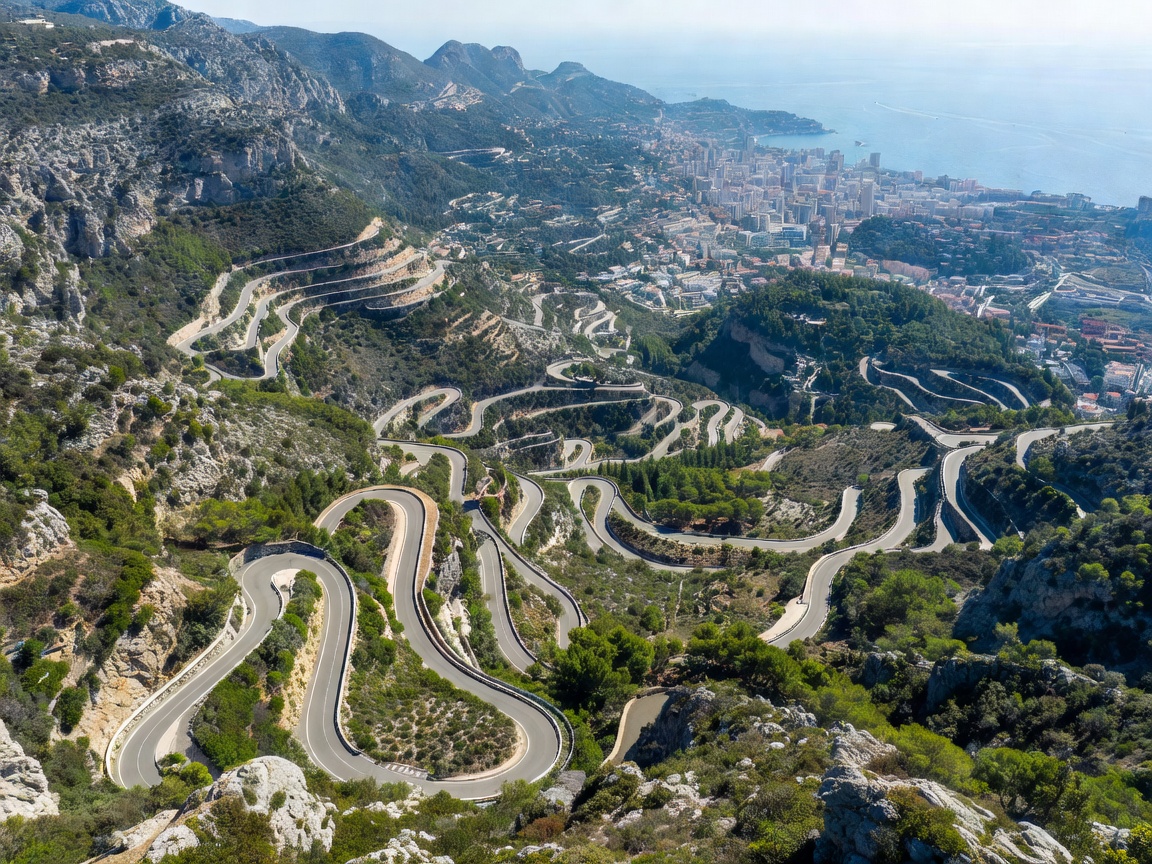
Built by Napoleon following the route of the ancient Roman Via Julia Augusta, the D2564 sits nearly 500 meters above sea level. This is a pure driving road—wide, sweeping curves with dramatic drops and minimal guardrails in places. It offers vast panoramic views stretching from the Italian border to Saint-Tropez. This was the filming location for Hitchcock's To Catch a Thief.
Pros & Cons
The Pros
- Road Quality: The French take immense pride in their infrastructure; the asphalt is generally excellent.
- Flexibility: Because the three roads run parallel, you can switch between them using steep connector roads to avoid traffic.
- Monaco Integration: You can drive part of the actual Formula 1 circuit in Monte Carlo during your journey.
The Cons
- High Costs: Everything from fuel to parking in this region is at premium Riviera pricing.
- Aggressive Commuters: Locals driving to work in Monaco know every apex and will aggressively tailgate tourists who dawdle on the Moyenne and Grande Corniches.
- Speed Cameras: Heavily enforced automated radar systems throughout the region.
Essential Driving Tips
French traffic law is strictly enforced. Carry high-visibility vests inside the cabin (not in the trunk) and a warning triangle. Speed limits change constantly, particularly when transitioning from the open Corniche into a built-up area (marked by the town name sign with a red border).
When entering Monaco, note that it is an independent principality. While there are no border checks, your mobile data roaming may suddenly switch to a non-EU zone, incurring massive charges if you rely on internet-based GPS. Download offline maps beforehand.