Navigating the Amalfi Coast: The SS163 Survival Guide
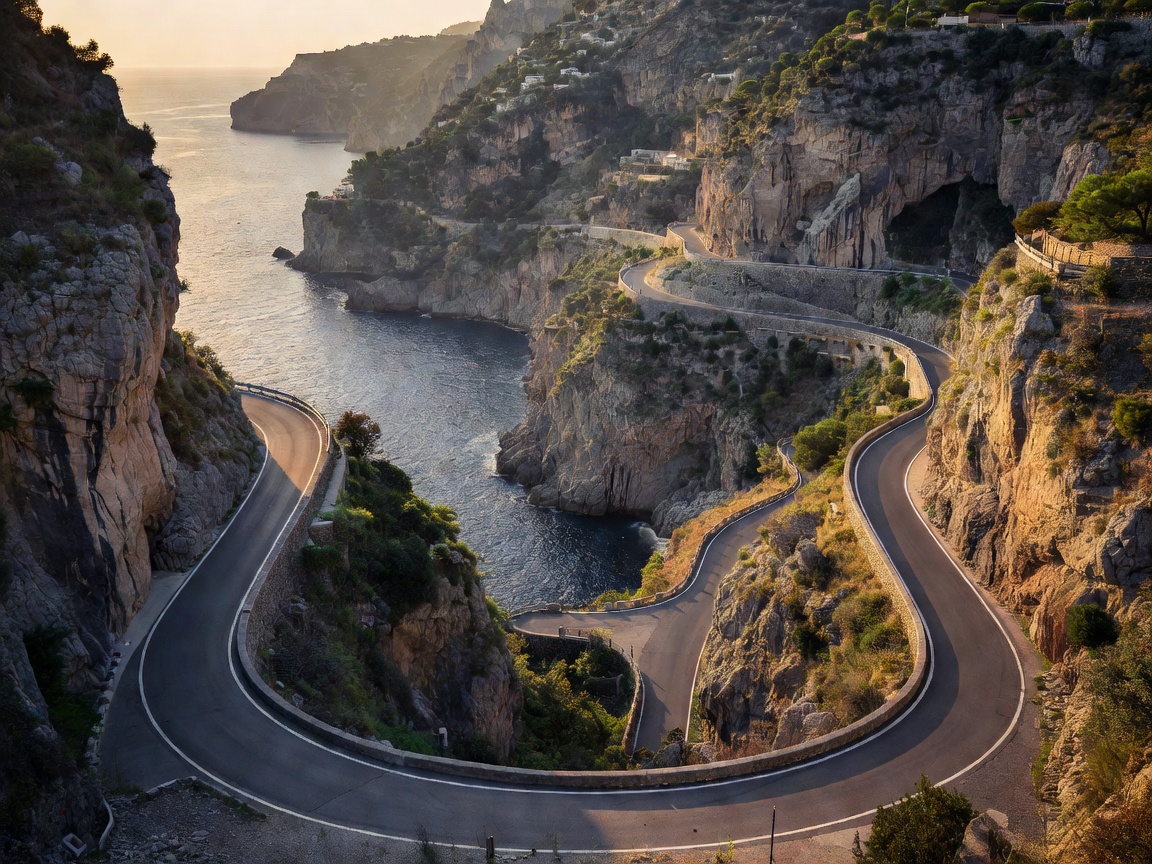
The Amalfi Coast drive is consistently ranked among the world's most spectacular stretches of tarmac. The Strada Statale 163 (SS163), often referred to as the "Amalfi Drive," connects the towns of Sorrento and Salerno. Suspended between the sheer Lattari mountain cliffs and the Tyrrhenian Sea, it is a triumph of 19th-century civil engineering and a profound test of modern driver patience.
The Route: Sorrento to Salerno
The drive itself is technically only about 50 kilometres, but measuring this route in distance rather than time is a rookie mistake. In peak summer, a 15-kilometre segment can take upwards of two hours. You will pass through iconic towns including Positano, Praiano, Amalfi, and Ravello. Each offers profound beauty, and each presents intense bottlenecks.
Starting from Sorrento, the road sweeps southward before cutting east across the peninsula. The moment you cross onto the southern coast facing the Gulf of Salerno, the topography becomes violently vertical. The road narrows, weaving through tunnels blasted directly into the rock face and bridging deep ravines.
Vehicle Selection: Smaller is Survival
This cannot be stressed enough: rent the smallest car you can legally and safely occupy. A Fiat 500 or a VW Polo is ideal. The SS163 features hundreds of blind corners where two full-sized vehicles cannot pass simultaneously. You will frequently find yourself reversing to wider sections to allow local buses—whose drivers maneuver with terrifying, millimeter-perfect precision—to pass. Large SUVs will invariably suffer mirror damage or worse.
Pros & Cons of the Drive
The Pros
- Unmatched Scenery: Vertical towns cascading down to turquoise bays. The viewpoints at Capo d'Orso are unparalleled.
- Culinary Rewards: Unbeatable local seafood and lemon-based specialties in every village.
- Historical Context: Access to historic cathedrals in Amalfi and the spectacular elevated gardens of Villa Rufolo in Ravello.
The Cons
- Extreme Traffic: Summer months bring gridlock.
- Parking: Incredibly scarce and astronomically expensive.
- ZTL Zones (Zona Traffico Limitato): Strict camera-enforced pedestrian zones in town centers that will generate massive fines if breached.
Essential Driving Tips
To survive and actually enjoy the Amalfi Drive, strategy is required.
Timing is everything: Do not attempt this drive between 10:00 AM and 5:00 PM in July or August. The optimal driving window is directly after sunrise. The light is spectacular, the massive tourist coaches haven't yet begun their routes, and the local delivery trucks are generally clearing out.
Understand the Horn: In Italy, honking before a blind curve is not aggressive; it is a mandatory safety protocol. When approaching a sharp, blind corner on the cliff face, give a short tap of the horn to alert oncoming traffic. Listen for answering honks.
Alternate Number Plate Rules: In recent years, local authorities have instituted alternating number plate systems during peak season to reduce volume. Cars with odd-numbered plates may drive on certain days, and even-numbered plates on others. Rental cars are not universally exempt. You must check the current regulations before setting out.
Conclusion
The Amalfi Coast is not a route for a relaxing, cruise-controlled Sunday drive. It requires total engagement, sharp spatial awareness, and a high tolerance for tight spaces. However, if you respect the road, choose the right vehicle, and time your journey correctly, the SS163 delivers an unforgettable motoring experience that justifies every ounce of its legendary reputation.